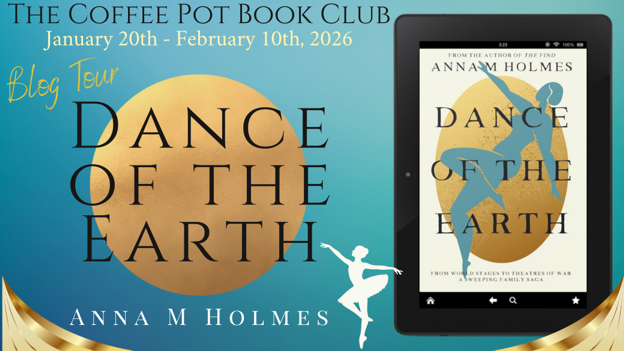
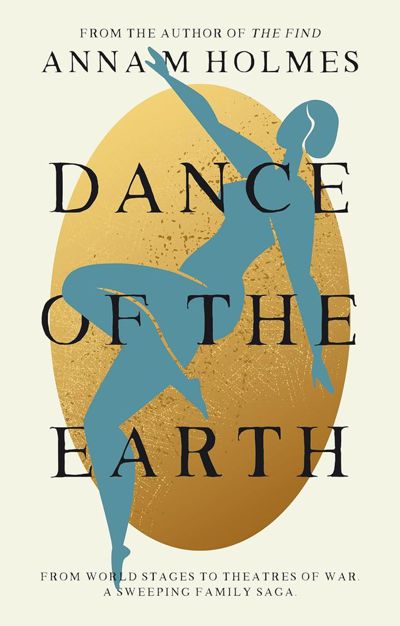
From world stages to theatres of war, Dance of the Earth is a sweeping family saga.
Set against the backdrops of London’s gilded Alhambra music hall, Diaghilev’s dazzling Ballets Russes, and the upheavals of the First World War, Rose and her children, Nina and Walter, pursue their ambitions, loves, and dreams. Dance and music shape their identities, helping each to find their place in the world.
Spanning the years 1875 to 1921—an era of profound artistic and social change—fact and fiction interweave in this tapestry of birth, sacrifice, and renewal. Art—both serious and comic—is at the story’s beating heart.
The Ballets Russes
In 1895 Sergei Diaghilev, then in his early twenties, wrote this about himself in a letter.
‘I am, firstly, a charlatan, though rather a brilliant one; secondly, a great charmer; thirdly, frightened of nobody; fourthly, a man with plenty of logic and very few scruples; fifthly, I seem to have no real talent. None the less, I believe I have found my true vocation – to be a Maescenas. I have everything necessary except money – but that will come!’
Even then Diaghilev knew his skills were those of an impresario.
He wanted to show the best of Russian art to the West. In 1906 he held a Paris exhibition of Russian visual art with detailed attention to how the work was exhibited. Music and opera followed the following summers, then in 1909 he brought his Ballets Russes to Paris. It would be two more years before London received the company for what became an annual summer treat until the first World War scuppered plans.
Diaghilev was about shaping taste and opinion. For ballet it meant selecting the best of the Russian Imperial Theatre’s dancers he could entice to join him during their summer break, and he called on the huge talents of old chums Alexandre Benois and Leon Bakst for the visual look of productions (scenery and costume). Nothing was left to chance. Throughout the years there are stories of Diaghilev staying up through the night after a dress rehearsal ensuring stage lighting was exactly as he envisaged. The entire aesthetic experience mattered.
Before The Ballets Russes arrived in London, audiences might see lavish ballet productions in West End Theatres, but these ballets were slotted in between sketches, songs, and performing animals – typical variety theatre. A trickle of Russian ballet stars arrived for short seasons – Anna Pavlova for one – but again, performed short showy pieces between other acts.
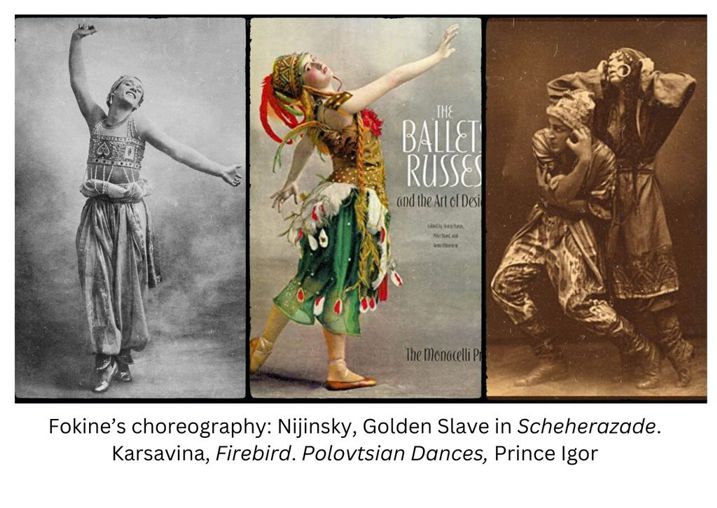
Diaghilev brought full evenings of ballet to London. Fabulous performers, with Tamara Karsavina among the women, and Vaslav Nijinsky and Adolf Bolm male soloists; sumptuous designs and costumes – Nicholas Roerich, Polovtsian Dances; Benois’s Petruska; Bakst’s Scheherazade. These brilliant colours and designs were trend setters influencing fashion putting the Ballets Russes (Diaghilev really) at the van-garde of art and taste.
Diaghilev liked to be astounded. What could his collaborators bring to him? He was an early champion of Igor Stravinsky and Stravinsky astounded not only his patron but musicians and audience. It was some years before the score of The Rite of Spring was recorded, as it was beyond tricky for professional musicians of 100 plus years ago.
Early ballets drew on the choreographic skills of dancer Michel Fokine who sought to move away from the strict classical Russian ballet training. He was, critics agree, influenced by early modern dance exponent, Isadora Duncan. Freer movement was in the air.
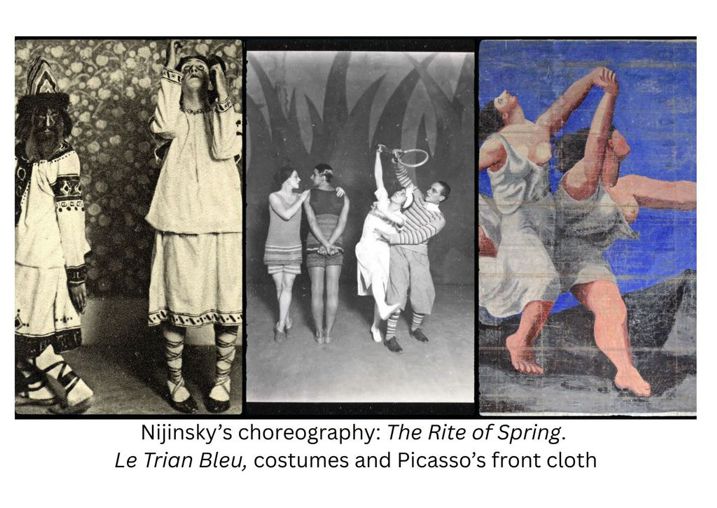
When Diaghilev promoted Nijinsky to create ballets, Fokine was out in the cold as company choreographer. Then when Diaghilev heard of Nijinsky’s marriage that was a nail in his coffin. But before that Nijinsky worked with Bakst on experimental ballets including The Afternoon of a Faun. He also choreographed The Rite of Spring with Roerich’s designs.
With the outbreak of both World War One, then the Russian Revolution, Diaghilev became cut off from Russia and never returned. Though he managed to get key personnel out of Russia, increasingly he turned to collaborators in Spain and France. Now for the first time Diaghilev worked with artists Henri Matisse and Pablo Picasso to design for him; with musicians Erik Satie, (French) and Manuel de Falla (Spain).
My story Dance of the Earth ends in 1921 when Diaghilev produced the first full length ballet in London, the Sleeping Princess (or Beauty as we know it). Up till then Diaghilev had educated his audiences to expect short modern ballets making up an evening. A full-length classical ballet proved too much for audiences and the run was cut short. Consider nowadays. This past Christmas season there were several Nutcrackers vying for our attention in London alone. Marius Petipa’s classic ballets to Tchaikovsky’s scores are box office bread and butter.
Hugely simplified, Ballets Russes trends for the period I write about with Diaghilev still alive to steer the boat:
- early ballets, sometimes exotic and risqué, and wholly Russian – dancers, composers and scenographers alike;
- middle ballets, increasingly experimental, with the enterprise becoming less Russian as Diaghilev recruited dancers and artistic collaborators from other European countries;
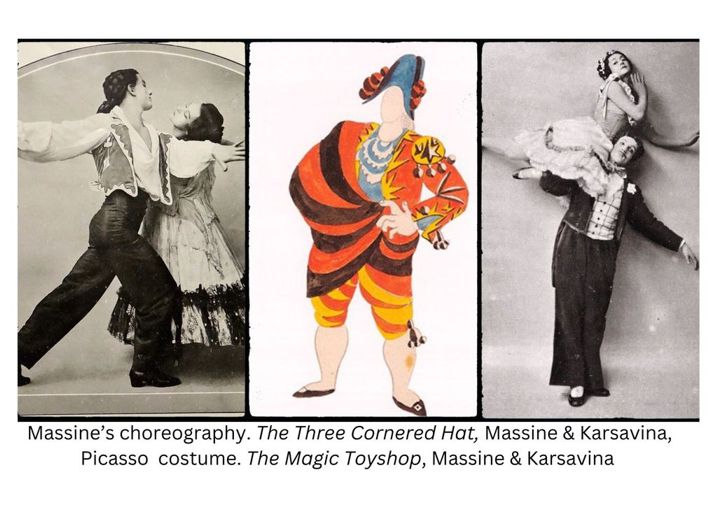
- Massine’s ballets were characterful and fun with the company more global than ever.
If I could time travel, I would set the date to 29 May 1913, location Theatre des Champs-Elysées, Paris. There I would witness The Rite of Spring premiere. With all that heckling, the conductor battling on, and dancers trying to hear their counts while pounding the stage sweltering in woollen outfits. Would I bat an eye? Doubt it. We are familiar with Stravinsky’s score – a staple of orchestras world-wide – and Nijinsky’s contorted movements sits easily in today’s choreographic feasts. Then it was different.
The Rite of Spring scenes are in the middle of Dance of the Earth, with the premiere significant for my characters Nina and Walter. I think of that ballet as a fulcrum in my story arc balancing what comes before and after.
It’s my pleasure to share a little ballet history with you.
Universal Buy Link: https://books2read.com/u/mdJR2d
Meet Anna M Holmes

Stories with big themes written as page-turners are Anna M Holmes’s speciality.
With an extensive background in dance and theatre, Dance of the Earth is a story she has longed to write. Her novels—The Find, Wayward Voyage, and Blind Eye—are all typified by deep research.
Anna worked as a radio journalist before embarking on a career in arts management. Originally from New Zealand, she now lives in South-West London.
Connect with Anna
Website: https://www.annamholmes.com
Twitter / X: https://x.com/AnnaMHolmes_
Facebook:  https://www.facebook.com/AnnaMHolmesWriter
Instagram: https://www.instagram.com/annamholmeswriter/
Bluesky: https://bsky.app/profile/annamholmes.bsky.social
TikTok:  https://www.tiktok.com/@annamholmes_
Amazon Author Page: https://www.amazon.co.uk/stores/author/B08R23BX34/about
Goodreads: https://www.goodreads.com/author/show/21436051.Anna_M_Holmes


