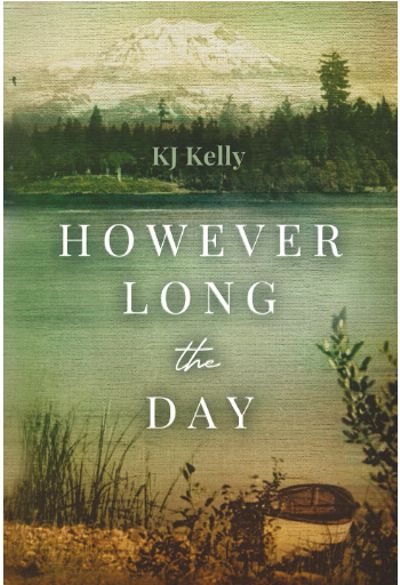
A Tale of Dignity and Survival
However Long the Day is a family saga set in the harsh mining communities of Michigan and Montana, and the lush Pacific Northwest.
Lorna, a young woman from the Canadian Maritimes, ruled as often by her heart as her head, runs away from an arranged marriage into the arms of a charming, roguish immigrant miner. After his untimely death, she endures demeaning and exhausting work to support and protect her family, but it is not enough to keep her family intact. Grace, forms a parallel story, navigating love, treachery, and society’s expectations.
Set against a backdrop of two world wars and the Great Depression, two generations of women fight for their dignity and survival, often with grit and resilience as their only weapons against financial devastation, betrayal, and the darkest of times. This intimate story captures the complexities, fissures, and joys of daily family life.
Historical Background
However Long the Day is a family saga set in the harsh mining communities of Michigan and Montana, and the lush Pacific Northwest. Lorna, a young woman from the Canadian Maritimes, runs away from an arranged marriage into the arms of a charming, roguish immigrant miner. After his untimely death, she endures demeaning and exhausting work to support and protect her family. Grace, her daughter, forms a parallel story, navigating love, treachery, and society’s expectations. Set against a backdrop of two world wars and the Great Depression, two generations of women fight for their dignity and survival.
The Mining Boom of the 1890s
The novel opens in an iron-mining community in Michigan’s Upper Peninsula in the 1890s. The Peninsula contained two major mining regions: the Keweenaw copper country to the north, and the Gogebic, Marquette, and Menominee iron ranges across the western and central portions.
Iron was first discovered in the Gogebic Range in the early 1880s and the state produced more iron ore than any other state for the next decade. The arrival of the railroad to this region led to extensive development and it fueled America’s Industrial Revolution.
Over three thousand men, mostly immigrants from over thirty countries, were employed in the iron mines. The work was grueling and dangerous. Miners descended into deep underground shafts, working twelve-hour shifts in conditions where rock falls, flooding, equipment failures, and explosions were constant threats.
Meanwhile, Montana’s copper mines, particularly those in Butte, were developing their own boom with the advent of electricity. Butte became known as the “richest hill on earth,” and many miners, seeking better wages and opportunities, migrated west from Michigan’s iron ranges to Montana’s copper country, as do the characters in this novel.
Labor Struggles and Company Towns
The mining companies had control over workers’ lives through the company town system. Companies owned the housing, stores, schools, and sometimes even churches. Workers were often paid in company-issued currency that could only be used at company stores, where prices were often inflated.
Women in mining communities managed households under difficult circumstances. After a husband’s injury or death in a mining accident, the work available to women was exhausting and poorly paid; taking in laundry, household servant, selling produce from their gardens, or providing meal services for miners.
The Pacific Northwest
In 1876, when Tacoma became the western terminus of the Northern Pacific Railroad, the railroad aggressively recruited settlers, offering land on favorable terms and subsidized travel. They also offered incentives to experienced farmers across the States and in Europe. Combined with Tacoma’s deepwater port on Commencement Bay, these inducements drew thousands to the area and diverse industries flourished; lumber mills, shipyards, manufacturing, and fishing, while the railroad connected Tacoma to the broader Puget Sound region and beyond.
The Great Depression
When the Great Depression struck in 1929, Tacoma experienced one of the coldest winters on record. Mass power outages and the shutdown of major power supply dams left the city without sufficient heat or electricity. During a thirty-day power shortage in the winter of 1929-1930, the engines of the aircraft carrier USS Lexington had to be brought in to provide Tacoma with emergency electricity.
The Depression plummeted Washington’s lumber production and employment in logging and sawmills dropped by at least fifty percent. Overall income in the state fell by forty-five percent by 1933. Families did all they could to survive and children in Tacoma became known as “gunnysack kids;” they scoured the town and area with gunnysacks to collect any scrap of metal, coal, wood, or food they could find. Local cooperatives were founded that advocated for self-help where farmers donated food in exchange for labor and workers exchanged skills, or bartered one service for another.
World War II and Tacoma’s Rise
Things turned around in 1940 with the defense buildup for World War II. Tacoma had one of the nation’s most productive shipyards, becoming the region’s largest employer with over 33,000 workers laboring around the clock at the peak of production. It became the largest producer of destroyers on the West Coast and the largest producer of escort carriers of any American shipyard during World War II.
History Through Women’s Eyes
An often-overlooked perspective is the experiences of women navigating turbulent historical forces, such as the Great Depression. While historians documented the economy during this time, including unemployment rates and statistics, business bankruptcies and foreclosures, production output, stock market values, GDP declines, etc., not as much has been said about the daily reality of women’s survival strategies with whatever tools they possessed. Focusing on their resourcefulness when confronted with impossible circumstances helps us appreciate the human cost and strength required to survive. It also demonstrates their resilience in the face of loss as they tried to preserve the dignity and livelihood of the family.
Amazon US: https://www.amazon.com/However-Long-Day-KJ-Kelly/dp/1734745827
Meet KJ Kelly

KJ Kelly grew up in the Pacific Northwest. Her studies and career have taken her to Europe, Latin America, and across six continents. After earning her MBA from the University of California, Berkeley, she worked in corporate America while pursuing her interest in storytelling through studies at The Writer’s Voice in New York and mentorship with private instructors. However Long the Day blends historical events, family mythology, and folklore, transformed through the lens of creative imagination.
Connect with KJ
Goodreads: www. goodreads.com/book/show/235405289-however-long-the-day?ac=1&from_search=true&qid=EL8WEN6yuV&rank=2
Instagram: https://www.instagram.com/kathleenkelly1246/
Artempo.publishing@gmail.com


