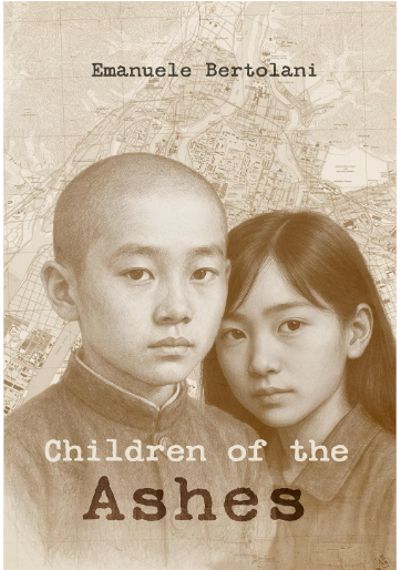
Blurb
Spring 1945
As Hiroshima moves towards a destiny that will change history for ever, the war in the Japanese archipelago reaches its climax. In the south, the Battle of Okinawa rages, sweeping soldiers and civilians alike into a bloody struggle without respite. From the base at Chiran, young kamikaze pilots take off on missions from which there is no return, in a desperate attempt to delay the inevitable. In Hiroshima, a class of schoolchildren, their teachers and their families face a reality in which war intrudes into every space: from classrooms to temples turned into shelters, from country homes to munitions factories.
The lives of the protagonists interweave in the collective story of a people confronting the collapse of their world, where the prospect of the end looms everywhere, duty blends with cruelty, compassion resists violence, and in the hearts of both adults and children endure love and hope.
Children of the Ashes is an historical novel set in Japan in 1945, during the Second World War, showing the impact of the conflict on society and exploring its political, social, cultural and ideological complexity. Through lesser-known episodes of extraordinary human value—such as the sacrifice of the young Himeyuritai, the dedication of the Nadeshikotai students, and the fate of the kamikaze pilots of Chiran, set against the tragedy of the atomic bombing of Hiroshima—the novel offers a unique perspective on a crucial period of world history and on the destiny of those who lived it first-hand.
Japan through Ruin and Rebirth
For many readers, the Pacific War began on 7 December 1941 and ended with the bombing of Hiroshima and Nagasaki in August 1945, a watershed moment in the history of the twentieth century. In reality, the causes that led to the war originated much earlier and, tragic as it was, the destruction of Hiroshima and Nagasaki did not prevent the Japanese from achieving the rebirth of their nation.
When I began writing Children of the Ashes, I wanted to explore the lives of those who endured those times and to narrate their untold stories without judgement or moralisation.
The novel is set across three connected wartime landscapes: Hiroshima, Chiran, and Okinawa. Each of these has its own place in the history of Japan’s final months in the Second World War, and each offered a different way into the emotional and moral reality of the period. History is often remembered for its most salient moments. Fiction allows us to explore the long hours before the climax, the thoughts, feelings, and relationships of those who, for the most part, remain the nameless and faceless protagonists of events.
The novel opens in Hiroshima in March 1945. From the beginning, the reader knows that there is no hope for the city as it stands on the threshold of destruction. In that sense, the central question is not simply what will happen to the protagonists, but what becomes of them as they move towards their destiny without knowing it. That awareness shapes the entire narrative. It gives weight not only to the great events to come, but to the ordinary moments that precede them, moments whose full meaning is visible to the reader long before it is visible to the characters themselves.
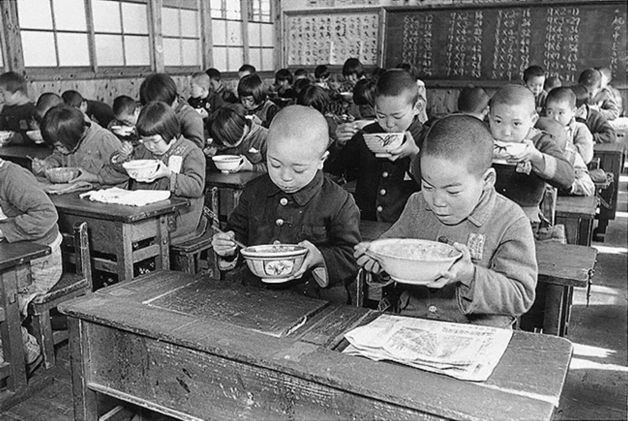
To this end, it was important for me to recreate in detail the historical and cultural context in which the novel’s characters are immersed. I wanted to recover that feeling of daily life lived under extraordinary circumstances: the schoolroom, the family meal, the formal language of duty, the unspoken rules that direct actions and choices. I wanted the world of the novel to feel inhabited not only by historical events, but by habits, routines, expectations, and silences. That meant paying close attention not only to what happened, but to the texture of life as it was lived from one day to the next.
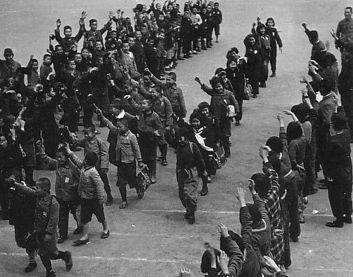
In Hiroshima, for example, families were already under severe strain after eight years of war. Food was rationed. Children were being evacuated to the countryside to escape the saturation bombing campaign that ravaged the cities. Older children were involved in preparations for total war, undergoing training and indoctrination as part of their school activities. Yet, even amidst the staggering hardships of wartime, children were still children. They played, joked, faced the angst of adolescence, and experienced the awakening of love.
The evacuation puts city children in contact with a reality that is unknown to them. It tests their capacity to endure separation from their families, but it also allows them to discover the ancient rhythms of the rice paddies and the camaraderie that is born from working together. In this way, the countryside becomes more than a place of refuge. It becomes a place of labour, adaptation, and discovery, where the disruption of war also opens a different encounter with the land, with community, and with the discipline of shared effort.
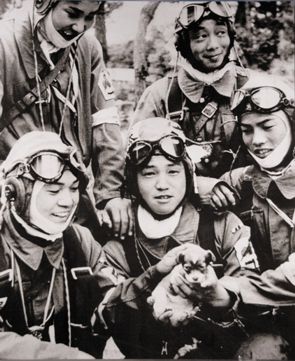
Another major strand of the novel led me to Chiran, in southern Kyūshū. Chiran is associated with the Tokubetsu kōgekitai, the Special Attack Units, commonly known as kamikaze, of the last phase of the war. From there, young Army pilots flew missions from which they were not expected to return. They were attended and cared for by a group of local high-school students called Nadeshikotai, the Dianthus Unit, named after the pink flower whose beauty and resilience were traditionally associated with Japanese girls.
It is one of those places where military history and emotional history meet with unusual force. On the one hand, there are aircraft, tactics, orders, and duty. On the other, there are letters, rituals of departure, the sacrifice of men as young as seventeen, and the fleeting consolation of small acts of kindness. Chiran offered me a way to enter a world in which the machinery of war and the fragility of human feeling coexist at every moment, without cancelling one another out.
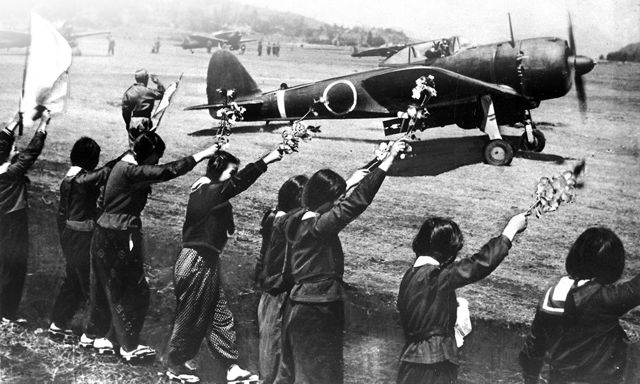
The coexistence of the sense of impending death and the simple, powerful will to live that permeates the testaments of many real-life tokkōtai pilots lives on through the interactions of the characters in this segment. What interested me here was not only the fact of sacrifice, but the emotional atmosphere that surrounded it: the gestures, the farewells, the tension between resignation and hope, and the way in which ordinary human contact could still preserve a sense of dignity in the face of almost certain death.
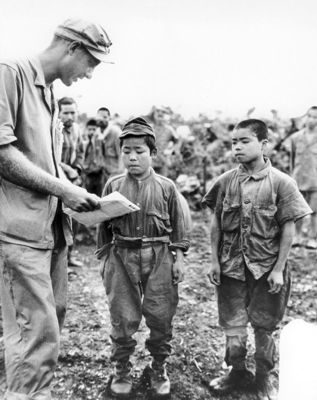
The third major setting of Children of the Ashes is Okinawa, the bloodiest and most savage battle fought on Japanese soil. For the purposes of the novel, Okinawa allowed me to enter a harsher, more physical dimension of the war: mud, rock, exhaustion, makeshift shelter, collapsing defensive lines, close-quarter combat, and the gradual dissolution not only of one’s physical integrity, but of the mental frameworks and ethical boundaries that had sustained people up to that point.
There is no way to tell the story of the Battle of Okinawa without discussing the suffering of the civilian population. Perhaps no other episode epitomises it more than that of the Himeyuritai, a group of 200 female junior-high-school students mobilised with their teachers to serve as nurses, supposedly in the rear, only to be thrown into the midst of battle with no training, assisting in brutal medical procedures in appalling conditions and often left to die. Boys as young as fourteen served in combat roles on the front lines. Tens of thousands of civilians were involved in mass suicides.
And yet, even within a tragedy of this calibre, acts of love and compassion endured. That, too, was essential for me. Okinawa is not only the place in which violence reaches one of its most extreme expressions. It is also a place in which endurance, pity, loyalty, and tenderness continue to exist under almost unendurable pressure. For that reason, it became an indispensable part of the novel’s structure and moral landscape.
In writing this novel, my task, as I saw it, was to remain faithful to the humanity of individuals without obscuring the systems that shaped them. To tell the story without passing judgement. That is up to the reader.
In the end, Children of the Ashes is not a novel about military operations in the narrow sense, though they are part of its world. It is a novel about lives lived under gathering ruin. It is about the last months before destruction, about the ways in which people remain recognisably human even when history pushes them towards roles they did not choose, and about the rebirth of a nation after an unprecedented ordeal.
More than anything, I wanted to tell the stories of those whose stories have not been told, out of respect and love for those who lived through unbelievable suffering while striving to preserve a measure of humanity.
Amazon US: https://www.amazon.com/Children-Ashes-Emanuele-Bertolani-ebook/dp/B0FP618RJJ
Amazon UK: https://www.amazon.co.uk/Children-Ashes-Emanuele-Bertolani-ebook/dp/B0FP618RJJ
Amazon Italy: https://www.amazon.it/dp/B0FP97VJLL
Meet Emanuele Bertolani
Emanuele Bertolani graduated in Japanese Language and Culture from the University of Rome “La Sapienza” and lived in Japan for several years, teaching English in public schools and practising traditional arts including kendō, jūdō, iaidō, tea ceremony, calligraphy and classical Japanese dance. He has also studied Sōtō Zen in both Japan and Italy. He has published translations and studies on martial arts.
Connect with Emanuele
LinkedIn: https://www.linkedin.com/in/manu3movingforward/
Book page: https://www.amazon.it/dp/B0FP97VJLL
Author page: https://www.amazon.com/stores/Emanuele-Bertolani/author/B0FNHH31MJ


