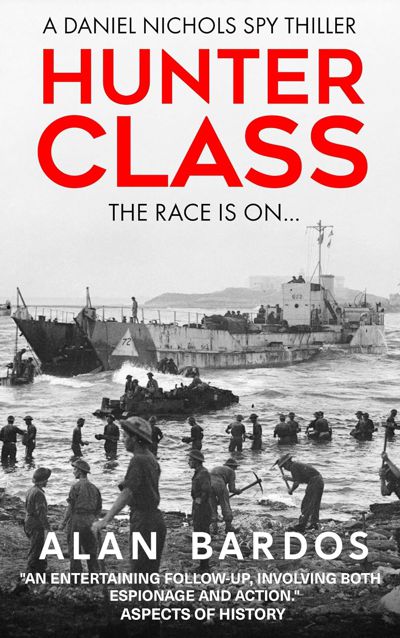
July 1943. Operation Husky, the invasion of Sicily is underway.
Lieutenant Daniel Nichols has been recruited by Ian Fleming into 30 Commando. A specialist unit that goes in ahead of the main assault to capture top secret enemy material. However, Nichols discovers evidence of a secret which could change the course of the conflict.
Section Officer Prudence Tiverton, an expert in the analysis of German radio traffic, uses Nichol’s discovery to formulate a plan that will give the Allies a decisive edge in the coming invasion of Europe. The capture of a German T52, Geheimschreiber – the teleprinter which Hitler uses to communicate with his most senior commanders.
Giacomo Moretti, a frogman in the Italian Navy’s elite Decima Flottiglia, carries out daring raids on Allied shipping. After the fall of Mussolini, Moretti joins forces with Nichols to secure Italian underwater technology before it falls into German hands.
Battling to overcome the disdain of her superiors, Tiverton fails to obtain support for her enterprise – but finds an ally in Ian Fleming and 30 Commando.
With the fate of the war hanging in the balance Nichols and Moretti embark on a treasure hunt that will require all their skill and guile.
Ian Fleming The ‘Sailor of Piccadilly’
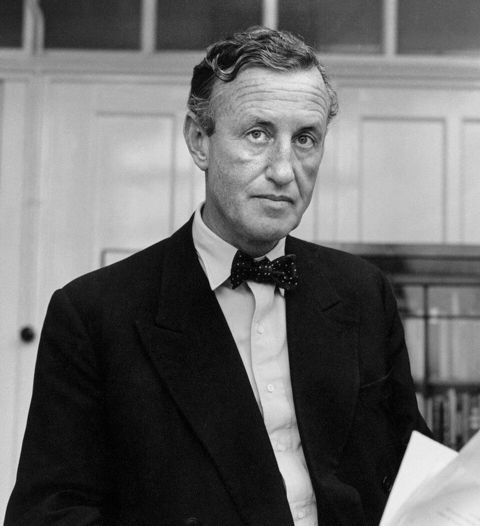
It was often quipped in the gentlemen’s clubs of Piccadilly that Ian Fleming did little more than ‘command in-trays, out trays and ashtray’ (Ian Fleming: The Complete Man, by Nicholas Shakespeare) during WWII. However, the creator of the archetypal secret agent was much more than just a Piccadilly Sailor.
While working in Naval Intelligence as Personal Assistant to its director, Admiral Godfrey, Fleming was the man who knew where the skeletons were hidden; as such, he was deemed too valuable to risk on operations. Although he undertook some fieldwork at the beginning of the war, Fleming was primarily an ideas man and a facilitator for Admiral Godfrey.
Many of his experiences during the war influenced and informed his Bond stories. A lot of Fleming’s work is still shrouded in myth and secrecy, which informed and influenced my new novel, Hunter Class.
In June 1940 with France collapsing and the Germans poised to march down the Champs-Élysées, Fleming was sent to France to keep the lines of communication open. He helped negotiations with Admiral Darlan, the commander-in-chief of the French navy, and with the evacuation of secret documents, French and British, from Paris just ahead of the Germans.
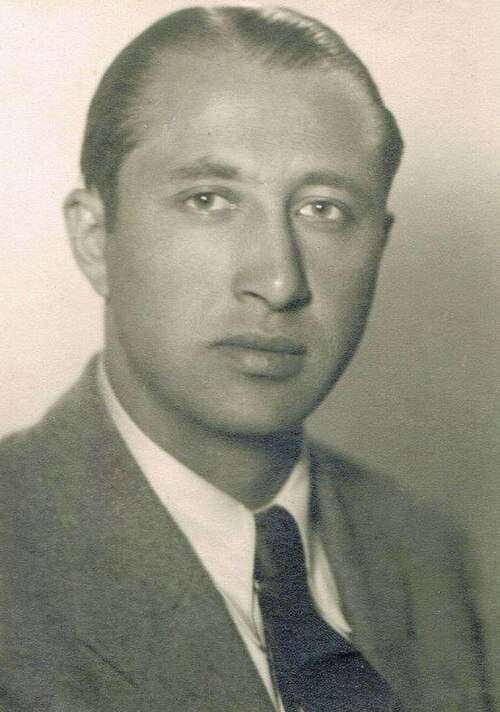
In 1941, Fleming carried out operations on the Iberian Peninsula. While in Lisbon, he met Dusko Popov, a suave Yugoslavian national and British double agent. Many have attributed Popov as an inspiration for James Bond. During this period, Fleming is said to have played an infamous game of chemin de fer with German Intelligence, which inspired the plot for the first Bond novel, Casino Royale.
He also carried out diplomatic missions and helped to set up the American Office of Strategic Services. Although these were not strictly Bond-esque assignments, there was plenty of drinking, gambling, womanising and travel, all of which no doubt influenced the detail of the novels.
Fleming’s principal role as facilitator meant he acted as the velvet glove in Godfrey’s steel gauntlet, smoothing ruffled feathers and keeping things moving. It was also a role that put Fleming’s prodigious imagination to good use; creating extraordinary schemes, he became the master of the memo.
The most famous example of this was his contribution to the ‘Trout Memo’, which put forward a number of eccentric ideas to plant seeds of confusion amongst the Germans. This included a proposal to place sensitive information on a dead body and drop it near the enemy coast—a scheme that developed into Operation Mincemeat.
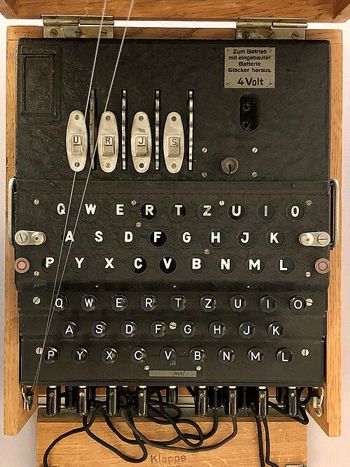
The need to capture a four-rotor naval Enigma machine, which had caused a massive blackout at Bletchley Park, became vitally importance. In response, Fleming came up with Operation Ruthless, a fantastic scheme to crash a Heinkel 111 bomber into the English Channel to try and capture an Enigma machine from a German rescue craft.
The need to capture enemy secrets was the driving force behind Fleming’s creation of 30 Commando Unit, which inspired my novel. The unit acted as intelligence commandos, carrying out raids on enemy bases and going in ahead of the main advance to ‘pinch’ key intelligence and enemy technology.
During Operation Torch, 30 Commando succeeded in capturing an Enigma machine that had been configured for use by the Abwehr. This allowed Bletchley Park to crack German intelligence traffic. Echoes of this can be seen in From Russia, with Love and Bond’s efforts to steal a ‘Spektor’ machine, which would allow British Intelligence to read Soviet signals.
However, it was during the invasion of Sicily and 30 Commando’s operations in the Bay of Naples area in 1943 that 30 Commando made a name for itself, and where Hunter Class is set. In a series of raids, they captured everything from codebooks, radar equipment, prototype mines and torpedoes, to an Italian Admiral and even a ‘pocket’ submarine.
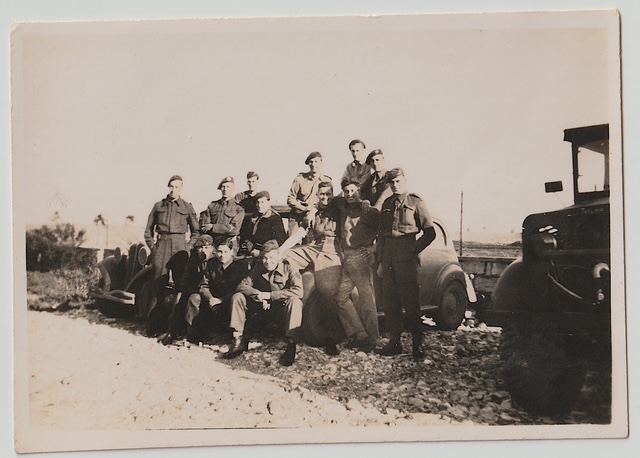
My character, Daniel Nichols and his team follow a similar path, in a treasure hunt for enemy technology. One of their principal objectives is to capture Italian underwater technology, a field in which the Italians excelled. These advances, particularly in the development of human torpedoes and limpet mines, enabled the elite Decima Flottiglia MAS naval commandos to pull off some stunning raids. Following the fall of Mussolini, many members of the Decima Flottiglia came over to the Allied side and Nichols joins forces with one of them, Giacomo Moretti.
Fleming gained knowledge of the unit through his intelligence role, and references to the Decima Flottiglia can be found in the Bond books. Emilio Largo, the Italian villain in Thunderball, is believed to have been inspired by Prince Junio Valerio Borghese, one of the Decima Flottiglia’s commanders. Some of the Italian unit’s most famous actions were carried out against merchant shipping at anchor in Gibraltar, operating from an abandoned freighter, the Olterra, in Spain. It had a trapdoor below the waterline through which their human torpedoes were launched. The same device was used in Largo’s yacht, Disco Volante. In Live and Let Die, Bond mirrors some of the Decima Flottiglia’s clandestine missions when he swims out to Mr Big’s yacht and places limpet mines on its hull. My novel draws heavily on a similar attack made by Sub-Lieutenant Luigi Ferrar of the Decima Flottiglia on a merchant ship in the neutral harbour of Alexandretta.
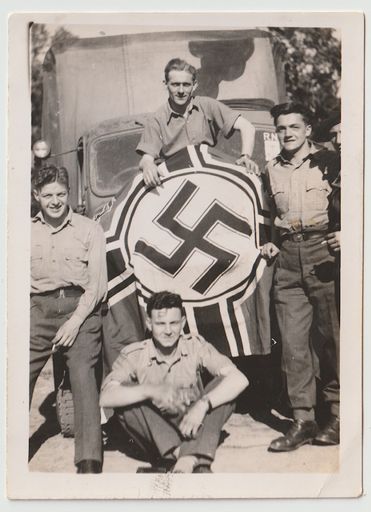
30 Commando’s operations against the V1 and V2’s also influenced Moonraker, which features a plot by Hugo Drax to turn the V2 rocket into an intercontinental ballistic missile. 30 Commando even captured a German scientist called Dr Walter, and Fleming gave one of Drax’s scientists the same name.
Strong hints of the work carried out by 30 Commando can be found in Octopussy. The antagonist, Major Dexter Smythe, a former Royal Marine Commando, could well have been a member of 30 Commando. He worked for the enigmatically named Miscellaneous Objectives Bureau, collecting intelligence about the Germans, and ends up with two bars of Hitler’s gold.
The legacy of 30 Commando can therefore be seen in Fleming’s writing and his wartime work, both of which remain a great source of inspiration—even if he was regarded as little more than the ‘Sailor of Piccadilly’.
- Group photos courtesy of Dave Roberts, 30AU Historian https://www.facebook.com/groups/168647893163533/?ref=share
Amazon US: https://www.amazon.com/Hunter-Class-Daniel-Nichols-Thrillers-ebook/dp/B0FXG9FGV9/
Amazon UK: https://www.amazon.co.uk/Hunter-Class-Daniel-Nichols-Thrillers/dp/B0G1R55T1D/
Meet Alan Bardos

Alan Bardos is the author of the Johnny Swift series of novels set during the First World War. His new series, set during the Second World War, follows the adventures of Daniel Nichols. In Rising Tide, Nichols becomes caught up in the intelligence war surrounding the Japanese attack on Pearl Harbour. In the latest novel, Hunter Class, Nichols embarks on a treasure hunt for enemy technology that could change the course of the war.
Connect with Alan
Twitter https://twitter.com/BardosAlan
Goodreads https://www.goodreads.com/author/show/15142092.Alan_Bardos
YouTube Channel https://m.youtube.com/channel/UCVOmjSYz2Eg7ChVFN3ygS5Q
Instagram https://www.instagram.com/alanbardos
Facebook https://www.facebook.com/AlanBardosWriter/


