
Algeria 1908.
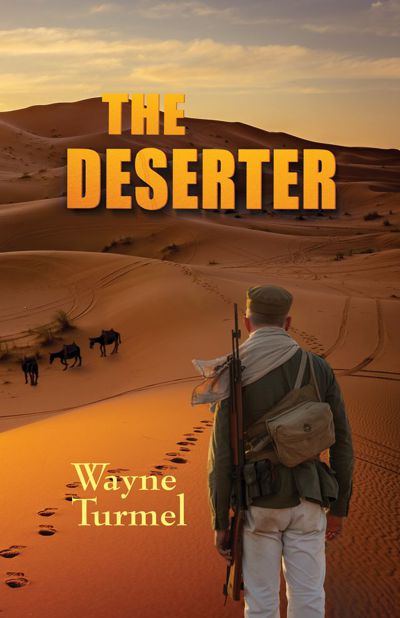
Gil Vincente is a Boer War veteran, broken and adrift on the rough streets of Marseille. Desperate, he seeks discipline and renewed purpose in the unforgiving ranks of the French Foreign Legion. At first, he finds it, but not for long. When a treacherous soldier frames him for murder, it forces the new legionnaire to run for his life.
Now Gil must fight to clear his name while pursuing the real killer through the rugged Atlas Mountains. With the Legion on his heels and time running out, will he find justice or be forever branded a coward and deserter?
The French Foreign Legion
Some of us are old enough to remember when the French Foreign Legion was everywhere in pop culture. Books like Beau Geste, the pulp stories of Theodore Roscoe, and countless movies (6 remakes of Beau Geste alone) spoke to the popularity of the genre. Legion tales were everywhere, just like westerns and military pictures (whether British Raj or Marines on Iwo Jima), and for the same reasons. Tales of adventure, bravery, found family, and evident good versus evil seem to be timeless. They were also unabashedly aimed at a male audience. That’s a problem when fewer than 20% of American men read a book for pleasure last year.
What was the French Foreign Legion, anyway?
The Legion still exists and conducts operations around the world, mostly in former colonial nations in Africa. But when we think of the French Foreign Legion, it’s not modern uniforms and automatic weapons that come to mind. It’s the “glory days” of fighting Arab tribes in the Algerian Sahara with bolt-action rifles and bayonets. In fact, its history goes back further than that.
Throughout its history, France has hired foreign mercenaries to augment its military forces. Scots, in particular, could find work fighting for France, usually against the hated English. But in 1831, King Louis Philippe officially created the Foreign Legion. Partly this was a way to absorb soldiers from Europe’s countless wars without “contaminating” the actual French army with a bunch of foreigners. It also gave them political cover when things went sideways, because it wasn’t the real army and they didn’t face the same scrutiny.
Eventually, the Legion would become known mostly for its work in North Africa: Algeria and Morocco. They also fought in Mexico, Indochina, and Madagascar, as well as any European wars France was involved in.
Why was the Legion myth so seductive?
The Legion was different from other militaries for several reasons that made it a great arena for exciting fiction. First, the places it fought were exotic to most English and American readers. The empty, merciless Sahara had an appeal to adventurous souls (like the nice Canadian boy writing this article.)
War tales have always been about found family. Think of WWII movies where the troop would contain a hard-bitten veteran, a nebbish from Brooklyn, and a wide-eyed Midwestern boy thrown together in the crucible of war. The Legion was like that, but with an international cast.
And what a cast! Most recruits had already served in their own country’s military, so they were older, more hardened, and experienced in battle. But why did they join? That’s the real source of the Legion mystique.
Foreigners could join under an anonymat, a false name. This gave them an opportunity for a fresh start. They could forget their past. While the legion never really took anyone without asking questions, and certainly doesn’t today, the tales grew. This was a place where desperate men could hide from their sins, seek redemption, or die trying. What an amazing source of stories that is!
Why don’t we hear about the Legion anymore?
You’d think the Légion étrangère would still be a popular topic for historical fiction, but not so. Part of the reason was overexposure. The same stories, told the same ways, with the same tropes became the subject of parody. Charlie Chase, The Three Stooges, Marty Feldman, and even Pepe Le Pew deconstructed and made fun of the genre. In fact, I recently sold a book to a young woman who bought it because (and this hurt my heart a little and made me feel ancient) “The only thing I know about the Foreign Legion is from Laurel and Hardy.” Ouch.
Running out of new ideas was certainly one challenge, although that’s never really stopped Hollywood before. Another reason for the downfall of Legion stories was that it was a terrible setting for romantic stories. Once you’ve had a general’s daughter, a prostitute, and a local girl angry at her father, it fails to be a great setting for burning passion, and people crave romance.
Finally, as history marched on, there were other settings and events to write about. WWII gave way to Vietnam, to Iran, to a lot of other places. Americans in particular have short memories, and if it doesn’t directly involve them, it’s hard to make such a large audience care. There is also the not-inconsiderable fact that naked, race-based, colonial oppression has fallen out of favor (at least in pop culture). You don’t see Frenchmen-in-the-desert stories just like you don’t find many British Raj epics or Westerns where people set out to kill as many Indians as they can.
With so much rich material, it’s easy for the legend to overshadow the reality. While there were certainly great victories and heroism, the legion is known in America as much for its losses as for any battles it won. Remember that even Beau Geste starts with the entire troop at Fort Zinderneuf being wiped out. We remember Cinco de Mayo because the Mexicans beat them at Camaron, and the Vietnam War came to America largely as a result of the disaster at Dien Bien Phu.
How does “The Deserter” fit in?
I wrote the tale of Gil Vincente partly to revive the Legion genre while acknowledging the uncomfortable truths. Someone said it was like Beau Geste if it had been directed by Sam Peckinpah. Assuming anyone remembers his raw, violent films of the 60s and 70s, that is, (and again thanks for making me feel old). It’s the tale of an English soldier stuck in an alien world, seeking to find order in his life when he couldn’t cut it as a civilian.
Maybe he’s doomed to failure and may never get the redemption he seeks, but what better place than the French Foreign Legion to make one last ditch effort?
Amazon US paperback link: https://www.amazon.com/Deserter-Tale-Foreign-Legion/dp/0982037783/
Amazon UK paperback link: https://www.amazon.co.uk/Deserter-Tale-Foreign-Legion/dp/0982037783/
This title will be available on #KindleUnlimited.
Meet Wayne Turmel

Wayne Turmel is a Canadian ex-pat now living and writing in Las Vegas. He’s the author of seven novels, the latest is The Deserter – a Tale of the Foreign Legion. His short stories have earned critical acclaim, including nominations for the prestigious Pushcart Prize.
Turmel’s longer works delve into the rich tapestries of history and the thrilling depths of urban fantasy, inviting readers into meticulously crafted worlds. At times humorous, sometimes dark but always with a careful eye for dialogue and detail.
He lives with his wife, The Duchess, and Mad Max, most manly of poodles.
Connect with Wayne
Website: www.WayneTurmel.com
Twitter / X: https://x.com/WTurmel
Facebook: https://www.facebook.com/wayne.turmel
Instagram: https://www.instagram.com/turmel.wayne/
Bluesky: https://bsky.app/profile/authorwayneturmel.bsky.social
Book Bub: https://www.bookbub.com/profile/wayne-turmel
Amazon Author Page: https://www.amazon.com/stores/Wayne-Turmel/author/B00J5PGNWU
Goodreads: https://www.goodreads.com/author/show/14980039.Wayne_Turmel


