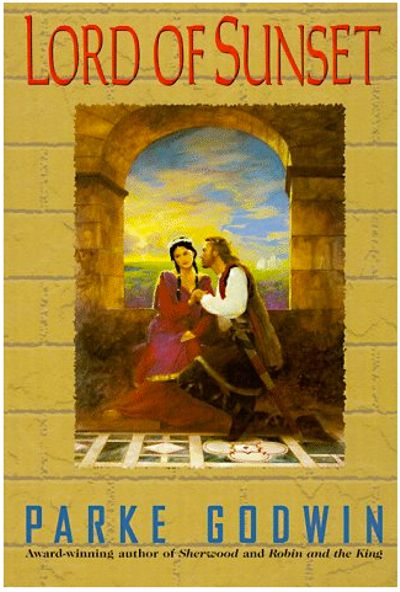
Blurb
True history and legend combine in a remarkable story of majesty, duty, and an indomitable love that survived the thunder and blood of eleventh-century Britain. Normans and Saxons fight and die for control of the destiny of a future empire, and Harold of Wessex–second son of one of the sundered nation’s most powerful noble families–is thrust into the vortex of a battle royal for the English throne. To wear the crown, however, he must forsake his peaceful life with his adored, hand-fasted wife, Lady Edith of Nazeing, the only woman he will ever truly love. But throughout his reluctant ascendance to supreme leadership of an embattled kingdom–and the concurrent rise of old-friend-turned-adversary William of Normandy, soon to be called “the Conqueror”–Harold will not betray his heart or his lady, though war be their legacy and tragedy their fate.From critically acclaimed, award-winning storyteller Parke Godwin comes an enduring tale of a nobility and a love that changed history–a magnificent epic that surely ranks among the great romantic adventures of all time.
My Review
Having written four books on this period, I came to this novel with a considerable amount of research under my belt. Yes, for the most part I was happy to see the major events were accurately depicted with some exceptions (not terribly important); for instance, Edwin and Morcar were not present at the battle of Stamfordbridge. However, I did take exception to a couple of things that were primarily plot devices. The Danish Style (more Danico) common-law marriage between Harold and Edith Swanneck was not something he was ashamed of; King Edward might have been against it in principle, but this kind of marriage was still common in Anglo-Saxon society; it hadn’t yet died out. There is no historical evidence that Harold and Edith were related in any degree. Also, King Canute did the same thing, and put aside his common-law wife when he attained the crown, just as Harold did. Although I do believe Harold loved Edith until the end, just as described. My other objection was the way Tostig was depicted, although this is certainly a matter of opinion. It was easy to show Tostig as a nasty, self-centered opportunist, but I don’t believe he was such a black-and-white rogue. Objections aside, this book was a good read and I did enjoy it. There was a lot to shove into 566 pages, and the author can be forgiven for skipping the Battle of Hastings.
Amazon: https://www.amazon.com/Lord-Sunset-Parke-Godwin/dp/0380726750/


