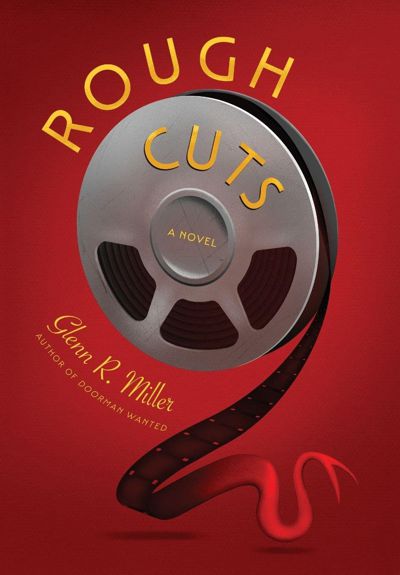
In Rough Cuts, the world of film in 1926 is about to change forever. On the cusp of “talkies,” directors and actors fear their greatest days might soon be behind them. Patrick J. Shepard, a director at the end of his career, has just completed his masterpiece, his vehicle for eternal fame. But there’s one problem: Ohio.
Harold Dawdry, the young, second-string minister at a small church in a corner of Ohio, has been appointed to the State Film Censorship Board. He regards this appointment as his ticket to the power and relevance he desperately craves. There is one director who has particularly rankled his delicate sensibilities: Patrick J. Shepard. The minister feels Ohio is best served if Shepard makes drastic cuts to his final film.
The silent film era is about to get loud.
Censoring Hollywood
Where do story ideas come from? In the case of Rough Cuts, this particular story came to me like a lightning bolt. I was visiting with my mother-in-law who told me that she had spent the day going through the files of her grandfather, who had been a minister in Marietta, Ohio, during the 1920s and ‘30s. Among her grandfather’s belongings were two long boxes containing 4X6 cards. Each card had type-written notes about changes that needed to be made to Hollywood films during the years 1926 and 1927.
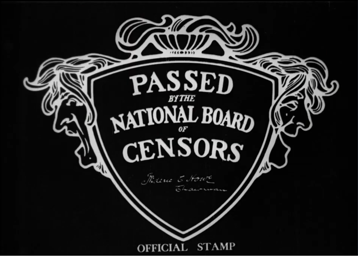
“Why would your grandfather have notes about movie changes?” I asked.
“I guess because he served on the Ohio Film Censorship Board,” she answered.
This elicited a bit of a blank stare from me. “Ohio could censor Hollywood films?” I asked.
“Apparently so,” she said. Smart phones were invented for just such a moment as this. I immediately googled this fun fact and discovered that Ohio was one of eight states that had a film censorship board; that, in effect, Hollywood was having to create numerous versions of its films if it wanted them to be distributed and shown within those states.
“Now THAT’S a story,” I said. “Can I write it?”
My mother-in-law, also an author, said, “Go for it.”
I was riveted by the possibilities. All narratives require conflict, and this one had it in spades. An individual in Ohio – who may or may not have any experience with films or film-making – going up against producers, directors, auteurs, forcing them to change their creations? I started outlining the story, one in which a young minister (purely fictional, having nothing to do with my mother-in-law’s grandfather) sees an opportunity for power through this assignment by going up against a retiring – dying – director who has created a film that he believes will be his legacy. I saw it as a satire that could illuminate a chapter in American history while reflecting current-day conditions. Hypocrisy, a lust for power, concern over personal legacy – these human qualities are ageless.
I found the research for this story to be fascinating. Beyond Ohio, the states of New York, Pennsylvania, Maryland, Massachusetts, Virginia, Kansas, and Florida each had state censorship boards. Beyond these states, hundreds of communities throughout the nation also had reviewing committees, but they did not have the state-level clout to demand changes; they would simply vote ‘yea’ or ‘nay’ as to whether a film could be shown within their jurisdictions. One city, however, that did have immense clout with their citywide review board was the city of Chicago. Their board was overseen by the Chicago Police Force. Yes, it was the responsibility of assigned men-in-blue (and they were all men) to view and judge Hollywood films.
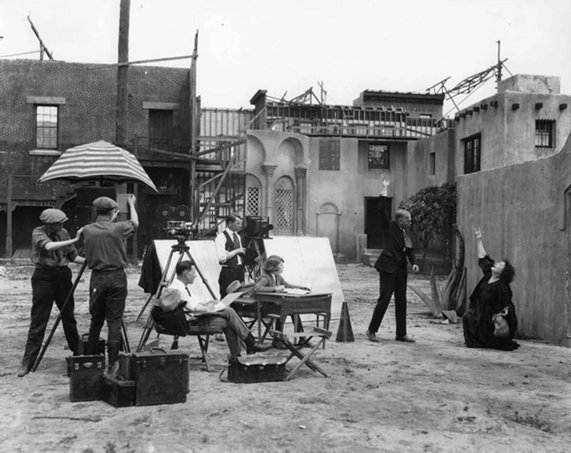
Did all of these reviewing committees drive Hollywood nuts? Of course they did. To begin with, it was an expensive process. Beyond the licensing fees required for statewide distribution, any and all required edits incurred additional fees (think: graduated speeding fines). Studios were charged by the foot (measured length) for anything within their submitted films that needed to be removed or altered. These censorship committees were revenue-generating entities for the states they served. You can quickly imagine the incentives that were built into these efforts – the more that needed to be removed, the more revenue generated. (Little surprise that during periods of recession or depression, when collected individual or business taxes decreased, objectionable film scenes rose.) And then, of course, on top of the state fees were the costs associated with additional editing and redistribution.
Were the states in sync with what needed to be altered or removed? Of course not. Pennsylvania may object to overly long kissing scenes; Virginia may put a kibosh on gratuitous – or unpunished – violence; Kansas may deem disrespect for authority to be offensive or inciting; and Florida may regard any reference to illegal alcohol – this was during Prohibition, remember – to be dangerous. And Maryland may find all of these examples to be fine in one particular movie but not in the next. Not only did the states have their own criteria, but individual members of the reviewing boards also had their individual axes to grind. It was all so willy-nilly, which is why Hollywood was pulling out its collective hairs.
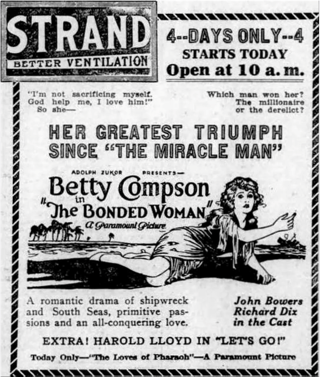
Though the studios objected to this state-by-state oversight, they did not want any sort of federal oversight or legislation. In the late teens and early 1920s, Hollywood was, increasingly, receiving pushback on its content not only from individual states, but from members of Congress and, perhaps, most threateningly, American churches, primarily the well-organized Catholic church. Feeling the best defense was a good offense, they established the Motion Picture Producers and Distributors of America (MPPDA) organization, better known as the Hays Office, named after its first president Will Hays. The industry was, essentially, attempting to wrest back oversight by promising effective self-policing. It took more than a decade before the Hays Code had any bite and slowly, but eventually, the state censorship offices shut down.
One of the themes of Rough Cuts is an examination of what an individual does with their one ounce of power. In the case of censors, they, of course, censor. Another theme is how does one protect their own artistic creation, one that is considered to be a masterpiece? In Rough Cuts, like two trains barreling toward each other on the same track, there is bound to be a collision.
Amazon: https://www.amazon.com/Rough-Cuts-Glenn-R-Miller/dp/B0GXNDYXSV
Meet Glenn R. Miller

Glenn R. Miller is the author of the novel, Rough Cuts (Koehler Books, September, 2026), and of the critically acclaimed and award-winning novel Doorman Wanted (“A comic novel that doffs its hat to master humorist P. G. Wodehouse”—Minnesota Star Tribune; “…sly, sophisticated wit…” The Miami Herald). Miller launched his professional career by working on television soap operas and game shows on the back lots of NBC Burbank. He holds a master’s degree from Northwestern University’s Medill School of Journalism and has served as a CBS-affiliate news producer, public television producer, and creative director at production agencies within the Twin Cities. Glenn and his wife live in Minneapolis, MN, and are the parents of two grown sons.
Connect with Glenn
Webpage: https://glenn-r-miller.com/
Instagram: https://www.instagram.com/glennrmillerauthor/
Facebook: https://www.facebook.com/glennmiller1


