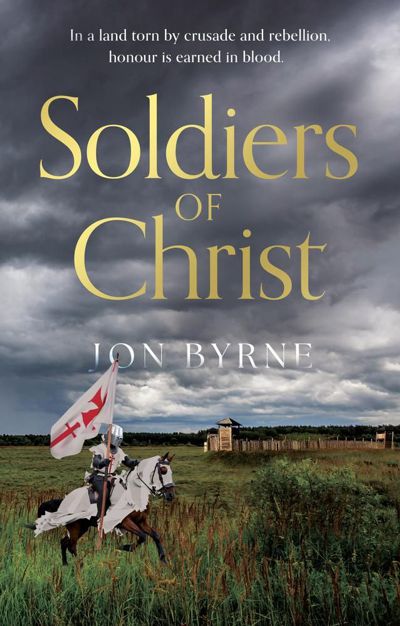
In a land torn by crusade and rebellion, honour is earned in blood.
1205. Richard Fitz Simon has fled England after his title was usurped, joining the Livonian Order of Swordbrothers – a German brotherhood of warrior-monks fighting to bring the word of God to the pagan frontier. After slaying the Lithuanian champion at the Battle of Rodenpois, Richard is celebrated by the Order and their Semigallian allies.
Yet his position remains precarious. Jealous rivals question his right to stand among the brotherhood, and his master, Knight-brother Rudolf, is enraged by Richard’s disobedience. When dark secrets from Lübeck resurface, Richard also finds himself at odds with Bishop Albert, head of the Christian mission in Livonia. As he struggles to reconcile faith, duty and identity, he is drawn into a brutal world of suspicion and bloodshed.
Sent on an expedition to build a castle deep in the wilderness, Richard soon sees tensions erupt – and the path he has chosen threatens to destroy everything he has fought to become.
The Livonian Brothers of the Sword: Crusaders on the Baltic Frontier
In the early thirteenth century, the eastern Baltic was one of the last regions of Europe to resist incorporation into Latin Christendom. Along the shores of the Daugava (Düna) River and deep in the forests of Livonia lived a patchwork of pagan peoples: Livs, Letts, Estonians, and Semigallians and more. Their lands would become the focus of a sustained and often brutal crusading effort. At the centre of this transformation stood the Livonian Brothers of the Sword, a military-religious order founded to conquer the pagan tribes, convert them to Christianity, and rule over the region.
The Swordbrothers emerged from the wider movement known as the Northern Crusades. By the late twelfth century, German merchants and missionaries had begun pushing eastward, establishing fragile footholds in the Baltic. The decisive step came in 1201, when Bishop Albert von Buxhövden founded the city of Riga, creating a base for both trade and missionary activity.
Crusaders arriving from Germany or elsewhere typically served for a single campaigning season before returning home. This left newly conquered territories exposed to rebellion. Bishop Albert needed a standing force, men who would remain in Livonia year-round, defending and expanding Christian rule.
Wikipedia
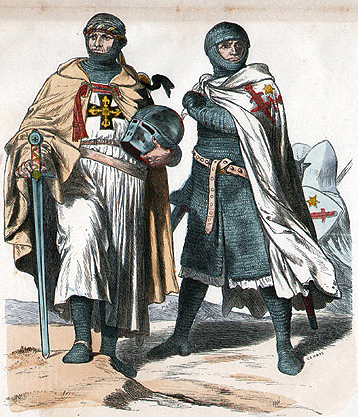
In 1202, he founded the Fratres Militiae Christi de Livonia – the Brothers of the Militia of Christ of Livonia, or Swordbrothers (German: Schwertbrüderorden). The order was confirmed by Pope Innocent III in 1204, giving it formal status within the Church’s crusading framework. Modelled in part on the Knights Templar, the Swordbrothers combined monastic vows with a life of warfare. Their members, mostly German knights, wore white mantles marked with a red cross and sword, symbols of their dual identity as monks and soldiers, and hence the name.
Officially, the purpose of the Swordbrothers was to protect missionaries and bring Christianity to pagan populations. In reality, their mission quickly evolved into territorial conquest. Livonia presented a unique challenge: its inhabitants were not followers of a rival world religion but adherents of local pagan traditions. Papal approval nonetheless framed campaigns against them as legitimate crusades, complete with spiritual rewards.
Military action became the order’s defining activity. The Swordbrothers led campaigns against the Livs, Estonians, and neighbouring tribes, often combining force with diplomacy. Resistance was met with siege warfare, punitive raids, and enforced submission. Conversion frequently followed conquest, though it was not always sincere or lasting.
The Swordbrothers themselves appear to be of very mixed origins, many of them from the ministeriale class of unfree knights, earning their living from service rather than by the resources of their own lands, and who made up the bulk of German knighthood at this time. Others were the sons of merchants and hardly noble at all, and some were criminals. The order had a reputation for being unrefined and hard to control, and by the end of their short history there were few crimes they had not been accused of.
Nonetheless, they successfully endured the severe hardships of the frontier and were triumphant in most of the battles they fought, mainly due to their superior weapons and the use of heavy knights, which despite being unsuitable in the marshy, forested terrain, proved devastating against the more lightly armed pagan tribes.
Central to their strategy was the construction of castles. Strongholds such as Wenden (Cēsis), Fellin (Viljandi), and Segewold (Sigulda) served as bases from which the order could dominate surrounding regions. These fortifications were more than defensive structures. They were instruments of control, administration, and colonisation. German settlers followed in their wake, reshaping the demographic and cultural landscape of the land around them.
The Swordbrothers were organised along strict hierarchical lines. At their head stood the Master (Herrmeister), elected for life, who oversaw both military campaigns and governance. Beneath him were regional commanders, each responsible for a castle and its territory.
The order itself was divided into knight-brothers, priest-brothers, sergeants and lay brothers. The knights formed the military elite, while priests ensured religious discipline and performed liturgical duties. The sergeants supported the brothers in battle, and the lay brothers handled practical matters such as logistics, agriculture, and construction.
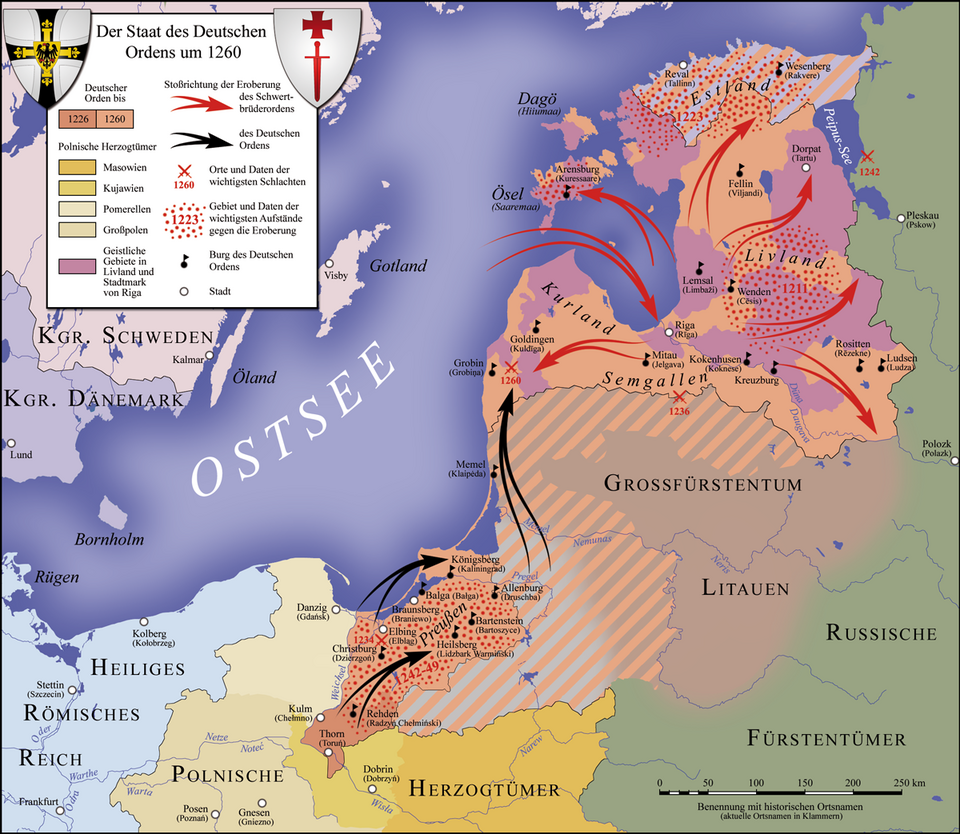
Crucially, the Swordbrothers were not simply a fighting force – they were territorial rulers. In 1207, they were granted one-third of all conquered lands, with the remainder controlled by the bishopric of Riga. This arrangement created an uneasy balance of power between the order and Bishop Albert. While the Swordbrothers relied on the Church for legitimacy, it also pursued its own political and economic interests, leading to frequent tensions with ecclesiastical authorities.
During the first decades of the thirteenth century, the Swordbrothers expanded rapidly. Their campaigns subdued much of modern Latvia and parts of Estonia, though control was often fragile and required constant reinforcement.
The order’s activities brought it into conflict not only with local tribes but also with neighbouring powers. Danish forces established themselves in northern Estonia, while Russian principalities such as Novgorod and Pskov resisted incursions from the west. Livonia became a contested frontier, where crusading ideology intertwined with regional politics.
Internally, the order faced its own difficulties. Maintaining discipline among warrior-monks in a distant and often lawless environment proved challenging. Disputes over land and resources were common, particularly between the Swordbrothers and the bishops of Riga.
The rise of the Swordbrothers ended abruptly in 1236. At the Battle of Saule, their forces were ambushed by Samogitian and Semigallian warriors. The defeat was devastating: most of the order’s knights, including Master Volkwin von Naumburg zu Winterstätten, were killed.
This catastrophe exposed the limits of the order’s power. Severely weakened, the Swordbrothers could no longer operate independently. In 1237, the surviving members were absorbed into the Teutonic Order, becoming the Livonian Order – a branch that continued the crusading mission in the Baltic under a stronger institutional framework.
Although the Swordbrothers existed as an independent order for little more than three decades, their impact was lasting. Their conquests laid the foundations for a crusader state in Livonia, later consolidated under the Teutonic Order. Today, the ruins of their stone castles still remain.
The castles, administrative divisions and patterns of settlement lasted for centuries. Christianity became firmly rooted in the region, while German-speaking elites came to dominate political and economic life. Livonia was drawn into the wider networks of European trade and culture, particularly through the Hanseatic League.
Their legacy also lived on in continued conflict. Their successor, the Livonian Order, would play a central role in regional struggles, including clashes with Russian forces such as those led by Alexander Nevsky in the mid-thirteenth century in the famous Battle on the Ice (Battle of Lake Peipus).
The Livonian Brothers of the Sword were a product of crusading Europe’s expansionist frontier. Founded to secure a fragile missionary effort, they became agents of conquest and colonisation. Their story reflects the complexity that characterised the Northern Crusades.
Though their independent existence was brief, the world they helped create endured. In the forests, swamps and river valleys of Livonia, the Swordbrothers carved out more than territory; they reshaped an entire region, leaving a legacy that would define the Baltic for generations.
Universal Buy Link: https://books2read.com/u/bz0eaZ
Kobo: https://www.kobo.com/gb/en/ebook/soldiers-of-christ-1
Meet Jon Byrne

Jon Byrne, originally from London, now lives with his German family by a lake in Bavaria with stunning views of the Alps. As well as writing, he works as a translator for a local IT company and occasionally as a lumberjack. He has studied the medieval world for over twenty years, building up a comprehensive personal library and a particular interest in the often-overlooked Northern Crusades.
Soldiers of Christ is Book Two of The Northern Crusader Chronicles, a gritty, historically grounded series focused on realism, moral ambiguity, and the brutal realities of medieval warfare.
Written for readers who value authenticity and atmosphere over romanticised adventure, the novel explores a largely forgotten crusading frontier, culminating in the first of many confrontations in a harsh wilderness of forest and swamp.
Readers who enjoy the historical detail of authors such as Bernard Cornwell, Conn Iggulden, or Ben Kane may find familiar ground here.
Connect with Jon
Website: https://www.jonbyrnewriter.com/
Facebook: https://www.facebook.com/JonByrneAuthor
Amazon Author Page: https://www.amazon.co.uk/stores/author/B0DJC6PL8D
Goodreads: https://www.goodreads.com/book/show/249448581-soldiers-of-christ


