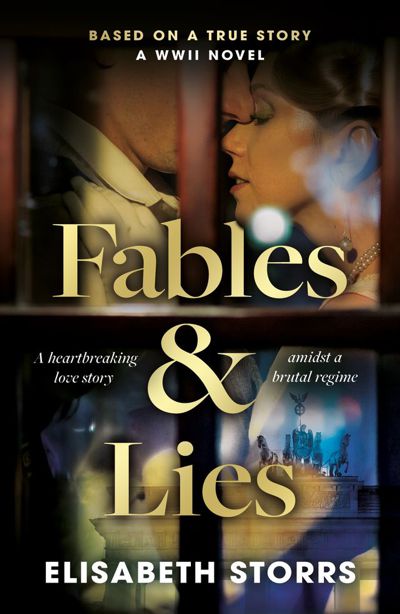
Under a brutal regime, what price must be paid to preserve truth, treasure and love in a world built on lies?
WWII Berlin. Freyja Bremer, a patriotic museum assistant, marries Kaspar Voigt, an ambitious SS scholar, to protect her father. Yet she is unaware her husband is instrumental in Himmler’s twisted quest for Aryan supremacy.
As she strives to safeguard the priceless Priam’s Treasure from air raids, Freyja falls in love with Darien Lessing, an archaeologist who exposes the moral decay beneath the Regime’s myths. Her awakening drives her into perilous resistance — aiding a Jewish doctor and his wife, Darien’s sister — while uncovering Kaspar’s role in the SS’s darkest programs, which subvert history to justify invasion, abduction and murder.
As Berlin collapses into chaos and bloodshed, Freyja, caught between duty, deception and desire, must risk everything to preserve truth in a world built on lies.
A heartbreaking yet triumphant love story, Fables & Lies shines light on lesser-known aspects of the Nazi Regime. It gives voice to the complex moral struggles of German women, the forgotten resistance of Gentiles married to Jews, the dangers of contested history, the evils of Himmler’s racial studies program and the unsung bravery of German museum curators who saved their nation’s treasures.
Twisted Germanic History
The genesis for my novel, Fables & Lies; A World War II Novel, arose from my fascination with the archaeologist, Heinrich Schliemann, who discovered a fabulous cache of gold at Troy known as Priam’s Treasure. Schliemann subsequently gave the trove to the Museum of Pre and Early History in Berlin from where it disappeared mysteriously for 50 years after the Soviets plundered the city at the end of the war.
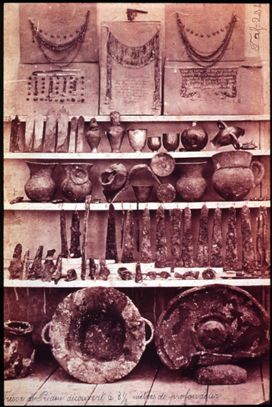
When researching the story of the Trojan gold’s disappearance, I discovered the museum curator who risked his life to protect the priceless exhibit was a Nazi and a civilian member of Himmler’s SS Ahnenerbe Research Institute. He was an example of one of the many German prehistorians who made a Faustian Bargain for career advancement as well as self-protection. However, subsequent research revealed more fanatical SS scholars subverted archaeology to promote the ‘Aryan Myth’ which exhorted Germans to believe in their superiority, and ultimately justified conquest, dispossession and murder.
My protagonist, Freyja Bremer, is a patriotic museum assistant. Raised on Nazi dogma, her eyes are opened when she falls in love with Darien Lessing, an archaeologist who shows her the rot beneath the Regime’s lies, as both strive to safeguard their nation’s treasures in the chaos of the war. Her awakening leads her to assist a Jewish doctor and his Gentile wife. As such, Freyja’s safekeeping efforts and her journey to enlightenment form the spine of the novel. However, I also tell a more complex tale exploring Himmler’s “Master Plan” and his promulgation of the Aryan Myth through the work of the SS Ahnenerbe.
The Aryan Myth held out Nordic-Germanic peoples evolved from survivors of Atlantis who migrated across the world to sow the seeds of all great civilizations before being weakened through interbreeding with inferior peoples. The “pure Aryans” who reached Scandinavian and Germanic territories were superior human beings with distinctive racial traits – blue eyed, fair-haired and physically fit. Having survived an environmental catastrophe, these super-humans formed the “Master Race” and were “bearers of culture” whose descendants were destined to be rulers.
Unfortunately, this fanciful construct led to monstruous real-life consequences when Nazi ethnologists implemented positive and negative eugenic policies. The “positive” aimed to strengthen the Master Race through breeding programs. The “negative” involved eliminating the disabled as well as those considered racially impure including Jews, Travelers, Slavs and Persons of Colour – the so called “destroyers of culture”. Dehumanization, persecution, and extermination ensued, first with euthanasia programs, and finally with genocide.
Himmler was, indeed, a believer in occult fantasies such as Atlantis and the Holy Grail. In the early years, the Ahnenerbe conducted outlandish quests to prove the existence of supposedly supernatural relics, including one to Tibet to locate traces of proto-Aryans from Atlantis. In fact, some of the subject matter of Spielberg’s Indiana Jones movies were derived from such expeditions. However, reputable scholars also conducted serious archaeological excavations to bolster the Aryan Myth. Their mission was to convince Germans (and the world) that early Indo-Aryan peoples (currently called Indo-Europeans) originated in northern lands and spread their influence south and east across Europe. This theory underpinned Nazi claims Germany was entitled to reclaim “ancestral lands” in Poland, Russia and Ukraine.
The determination to justify Germany’s conquest of lost eastern territories was exemplified by the “German Academic Action”. This involved embedding prehistorians with the army to brainwash soldiers to believe the invasion of Russia and Ukraine was a “homecoming”. After all, they were supposedly reincarnations of Aryan peoples such as the Ostro-goths and Scythians who once ruled the region! In effect, the Greater Reich would stand on the remains of Germany’s ancestral realm.
To reveal the operations of the Ahnenerbe, I was faced with the ethical dilemma of first marrying the brainwashed Freyja to the SS ethnologist, Kaspar Voigt, who considers her the ideal Aryan wife. I saw it as the only credible plot device to reveal his despicable actions. I found it very difficult to write the earlier scenes where Freyja is enthralled by Kaspar who is a famous explorer when they first meet. I knew I was spouting dangerous rhetoric but, in doing so, I also reveal how persuasive Nazi esoteric beliefs were to those educated within their world. As Primo Levi said: “When understanding is impossible, knowing is necessary.”
When I started the book, I was chilled by Himmler’s vision and wanted to sound a warning about the corruption of academics who twisted history to serve power. By the time I finished the novel, I saw our world turning to more authoritarian leaders, with democracy undermined by similar strategies from the Nazi playbook. History is repeating in disturbing ways. I feel Fables & Lies is a novel for our times and will give readers a better understanding of how a populace and institutions can fall under the spell of zealots. Most of all, the book shows history is never neutral, and that courage can be found in the smallest acts of defiance
Universal Buy Link: https://books2read.com/fablesandlies
* Goodreads Giveaway *
https://www.goodreads.com/giveaway/show/442105-fables-lies-a-wwii-novel-based-on-a-true-story
Meet Elisabeth Storrs
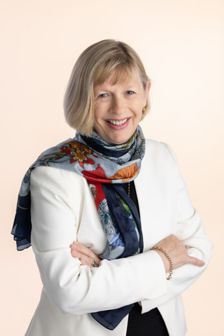
Elisabeth Storrs has a great love for history and myths. She is the award-winning author of A Tale of Ancient Rome trilogy which was endorsed by Ursula Le Guin, Kate Quinn and Ben Kane.
Now her obsession lies with Trojan treasure and twisted Germanic prehistory in her new release, Fables & Lies: A World War II Novel.
Elisabeth is also the founder of the Historical Novel Society Australasia and the $155,000 ARA Historical Novel Prize. She lives in Sydney with her husband in a house surrounded by jacarandas.
Connect with Elisabeth
Website: https://www.elisabethstorrs.com
Twitter / X: https://x.com/elisabethstorrs
Instagram Handle: https://www.instagram.com/elisabethstorrsauthor/
Facebook https://www.facebook.com/elisabeth.storrs/
Pinterest: https://www.pinterest.com/elisabethstorrs/
Book Bub: https://www.bookbub.com/authors/elisabeth-storrs
TikTok: https://www.tiktok.com/@elisabethstorrs?lang=en-GB
Amazon Author Page: https://www.amazon.com/stores/Elisabeth-Storrs/author/B005NVUWZ4
Goodreads: https://www.goodreads.com/author/show/4489059.Elisabeth_Storrs


