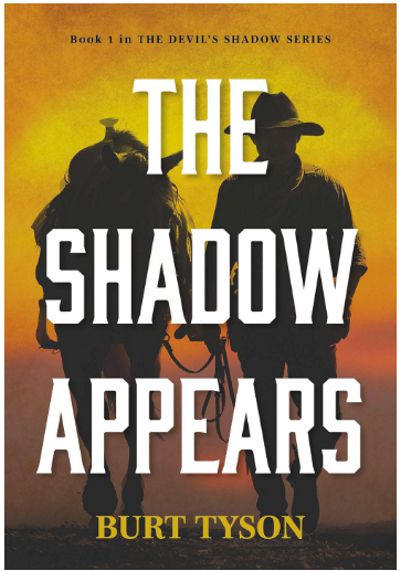
He survived the war. What came after took everything
.
March 1865. The Confederacy is collapsing. Richmond is falling. And Captain Robert Hester—once a feared Mosby Ranger—wakes from his wounds to find himself hunted, outlawed, and marked for death.
Reassigned to help escort President Jefferson Davis and the Confederate Treasury out of Richmond, Hester rides into the final days of a dying cause. But when he breaks away to scout near his Virginia home, everything changes.
He watches as Union raiders slaughter his family and burn his home to the ground..
In a single moment, the war becomes personal.
Fueled by grief and a relentless thirst for vengeance, Hester turns his back on surrender and rides into a shattered South—through outlaw country, deserters, and the ruins of everything he once believed in.
With only his loyal sergeant at his side, he hunts the men responsible and clings to the last pieces of his honor.
But revenge comes at a cost. And every mile he rides pulls him further from the man he used to be.
As the war ends and the Confederacy falls, Hester faces a final choice: lay down his guns… or ride on into exile, chasing a war that may never truly end.
Historical Background
John Singleton Mosby, was a frail, sickly and small-statured child, often bullied, but never cowered. He was pugnacious and always confronted his bullies, always willing to fight, but never successful. In 1861 when the War Between the States (known in the South as the War of Northern Aggression) broke out, he spoke against secession. Nevertheless, he left his law practice in Bristol, Virginia and joined the Confederate army as a private in the “Virginia Volunteers,” a company of mounted infantry. His first experience of battle was at First Manassas (the battle the North called First Bull Run).
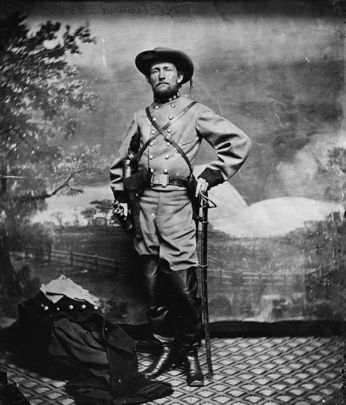
His remarkable skill at intelligence gathering soon caught the attention of J. E. B. Stuart and in early 1862, he was promoted to 1st Lieutenant and assigned to Stuart’s cavalry scouts. In late 1862, Mosby took an idea to Stuart of forming a company of cavalry which would operate behind the Union’s lines in Northern Virginia, arguing that the company could wreak havoc on Northern supply lines, gather information on Union army movement and force the Union to divert troops to contend with the company’s activities. Stuart was impressed enough that he took the idea to General Robert E. Lee and in June of 1863, Lee authorized Mosby to raise a company. With a single company of cavalry, the 43rd Battalion of the 1st Virginia Cavalry was created with only nine men.
At the time of Lee’s surrender, Mosby’s Rangers had conducted at least 35 major raids and skirmishes and Mosby had earned the nickname of the “Gray Ghost” for his ability to appear unexpectedly and disappear just as surprisingly. He and 29 of his men even managed, in a raid near the Fairfax County courthouse in early March of 1863, to capture an Union general, 2 captains, 30 enlisted men, and 58 horses. All without firing a single shot. Two days later he was promoted to captain and eleven days later to major.
Major Mosby became the “Gray Ghost” throughout both the South and the North. Loved and admired in the South, he was hated and demonized in the North as a brigand and an outlaw. The Union army even went so far as to issue a standing order that Mosby and any of his men were to be hanged immediately without a court-martial if captured. After Lee’s surrender, any Confederate soldier or office was allowed to surrender and be paroled–all, that is, except for Mosby and his Rangers.
While Mosby was wreaking havoc in the Mosby Confederacy against the Union army, General William Tecumseh Sherman was implementing his “total war” strategy and his “scorched earth” policy against the South, destroying homes and crops as he marched his army through Tennessee and Georgia. After his successful capture of Atlanta and his “March to the Sea” and capture of Savannah, Grant ordered the same strategy to be used across the South. General Philip Sheridan marched south through Virginia and the Shenandoah Valley. General Wesley Merritt conducted his “burning raids” in Northern Virginia, especially in the “Mosby Confederacy.” General Edward Potter led his troops from the coast of South Carolina westward, destroying cotton and cotton mills, trains, depots, and all supplies considered useful to the Confederate army.
Perhaps the worst of these efforts was led by General George Stoneman. Ordered to march his troops through Tennessee and into North Carolina with no military objective, Stoneman recruited disgruntled civilians in Eastern Tennessee and Western North Carolina to join his march. The men who joined had deep resentment against their neighbors who supported the South and their motivation for joining was often to seek revenge on those they felt had treated them harshly and unfairly throughout the war. As a result, Stoneman led a force that was comprised of trained soldiers and untrained and undisciplined volunteers. Stoneman’s troops brought fire, destruction and death to Eastern Tennessee, Western North Carolina and Southwestern Virginia, leaving behind desolation and despair.
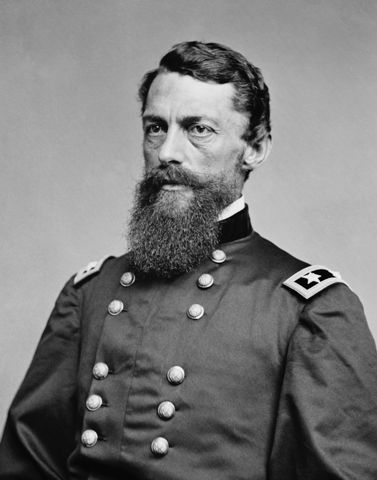
Stoneman had no supply lines. He relied on foraging for the food for his troops and the feed for his horses. As such, he sent out groups of foragers, as Sherman had done, to find and “requisition” the supplies needed. Called “bummers,” these men were mostly comprised of the vengeful volunteers recruited in Eastern Tennessee and Western North Carolina and the “misfits” of his army.
The bummers were sent out with no orders but to procure the provisions Stoneman’s army required. There were no orders as to how civilians were to be treated or compensated. To make matters worse, most of these companies of bummers had no commissioned officer in charge. As a result, they ran free, taking whatever they wanted, pillaging homes for personal gain, burning or trampling fields and crops, stealing horses, burning homes and barns, and, in too many cases, raping women before killing them, and killing all civilians they encountered.
This was the historical foundation for The Shadow Appears.
The Genesis of The Shadow Appears
About 40 years ago, as I was trying to deal with a difficult time in my life—losing a business, contending with a divorce after 15 years of marriage, trying to find a new way to make a living—I gave a lot of thought to how little preparation I had been provided for failure. I had always been encouraged to aim for success, but never given counsel on how to deal with failure if it came my way.
With a lot of time on my hands, I thought frequently about this and finally decided that the best metaphor for a man unprepared for failure but facing failure was a Confederate soldier who had lost his “Cause,” his home, his family, his hope and his future. I kept hearing a quote in my head—hope is the last refuge of the despairing. I decided that, one day, I would write a book entitled The Last Refuge and the theme would be how a man trained for success dealt with failure.
That idea stayed with me for over 30 years. A couple of years after my 2nd wife died 10 years ago, I realized that I had little to do in my retirement. I had little reason to get up each day. So, I decided to return to the writing I had always wanted to do and revived the concept of The Last Refuge.
I realized, as I was writing it, that the plot and action were too expansive for a single novel, so I decided I would create a series. I named that series The Devil’s Shadow and named this 1st novel The Shadow Appears. The 2nd novel in the series, The Shadow Grows, was released on April 25th, 2026 and I am planning to release the third novel in the series, The Shadow Seeks A Home, late in 2026 or early in 2027.
The series that began with how a man deals with complete failure became something larger. I found it encompassed much more: good versus evil, killing versus protecting, revenge versus honor, adversity versus survival. It became a study of failure, loss, redemption and salvation.
Amazon US: https://www.amazon.com/gp/product/B0FWKX3BWV
Meet Burt Tyson
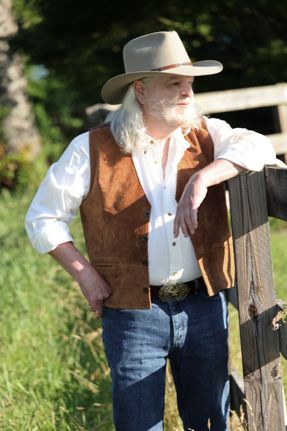
Burt Tyson almost never takes off his cowboy hat, but he does tip it to the ladies. As a child, he loved historical adventure stories like Davy Crockett and TV Westerns including Hopalong Cassidy, The Lone Ranger, Roy Rogers, and Have Gun Will Travel. As a teenager, his love of history and adventure continued as he read novels of the American Frontier.
Burt continues the tradition of good men and women confronting evil in the 19th century American West as he writes The Devil Appears, the first novel in his The Devil’s Shadow series. Readers won’t have difficulty identifying the good guys and gals: they’ll be the ones who stand tall, saddle up despite the risk and, if they’re men, always respect the ladies.
In the remote small South Carolina town where Burt writes, there are lots of good men and women, but not too much adventure. He has to provide the adventure in his novels.
Visit Burt’s Website: https://burttyson.com/


