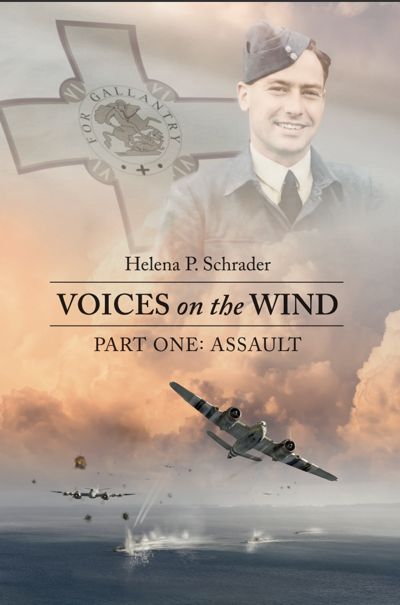
Early 1942: the fate of the Suez Canal and access to Middle East oil hangs on the fate of an island just 17 miles long by 9 miles wide: Malta.
Determined to destroy the British forces threatening Rommel’s supply lines, the Axis powers drop more bombs on Malta than London endured throughout the Blitz. The population is forced underground, while the RAF struggles with inadequate resources to fend off defeat. Meanwhile, Britain’s Atlantic lifeline is fraying….
Voices on the Wind follows the fate of four of Malta’s defenders: Senior Intelligence Officer and former Battle of Britain ace, W/Cdr “Robin” Priestman; WAAF SigInt Officer Candice Weld, sent out from Bletchley Park to “man” the only X-machine outside the UK; F/O “Ned” Nettleton, a Beaufort torpedo bomber pilot engaged in suicidal attacks against enemy shipping; and Chief Officer Stevie Mackay of the British Merchant Navy, fighting to keep Britain’s own lines of supply open.
The Siege of Malta
When looking back on the Second World War, it is easy to dismiss the Mediterranean Theatre as secondary. Yet, the Mediterranean was vital to Allied success because it was the gateway to Middle Eastern oil. The loss of the Suez Canal would have crippled Great Britain’s ability to continue the struggle. In 1942, that very nearly happened. Here’s the story.
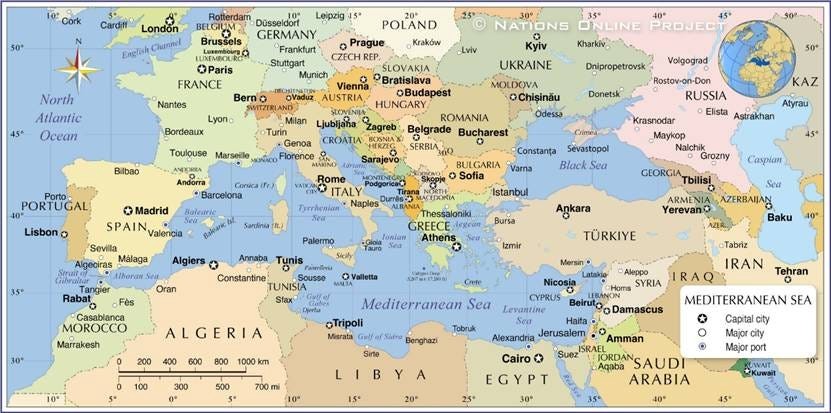
At the start of WWII, Great Britain and France jointly controlled, directly or indirectly, the entire North African coast except for Libya. In addition, the Western and Eastern Mediterranean were in French and British hands respectively, while control of the waterways was shared with neutral powers such as Spain, Greece and Turkey. Italy was dominant only in the central Mediterranean.
Everything changed on 10 June 1940, the day the French government fled Paris. That same evening, Mussolini declared war on both Britain and France. Eleven days later, France officially surrendered to Germany, and Britain stood alone.
The British were woefully unprepared for this situation. The British government had anticipated neither the French surrender nor the need to defend the Mediterranean on its own. Now, quite suddenly, the north coast of the Mediterranean was in hostile hands from Gibraltar to Turkey, while the south coast was enemy territory all the way to Egypt. Fortunately for the Allies, for over 140 years, the British had maintained a large naval base and refuelling station in the central Mediterranean — in Malta.
Malta was almost equidistant from Gibraltar and Alexandria, and boasted two large, extremely well-protected harbours more than 70 feet deep. It could host the entire Mediterranean Fleet and had a large, modern shipyard capable of accommodating the largest ships of the Royal Navy, including (in a pinch) aircraft carriers and battleships.
It was also just 60 miles south of Sicily.
Mussolini thought it should be his — and his bombers could reach it with ease. Ominously, the island lay well within the range of Italian fighter aircraft, too. That meant the Regia Aeronautica could strike with confidence.
The day after declaring war on Britain, Mussolini opened his aerial campaign to force the British out of Malta and bring the island under Italian control. With the British homeland itself under attack, both the RAF and the British Army questioned the wisdom of defending Malta; they urged the government to abandon the island. The Navy — and Prime Minister Churchill — adamantly refused.
And so, the struggle began.
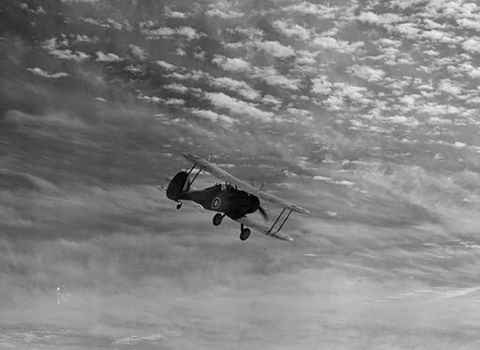
At the time, Britain had no fighter squadrons on Malta, and the initial air defence was entirely improvised; staff officers without fighter training or experience took to the sky in Sea Gladiator biplanes, a half dozen of which were by chance lying about in crates when the Italian air attacks started. They became known as Hope, Faith and Charity because no more than three were ever in the air at the same time.
Gradually, or rather in dribs and dabs, Hurricanes and the pilots to man four fighter squadrons were deployed to Malta. (Below Hurricanes on a carrier deck on their way to Malta.)
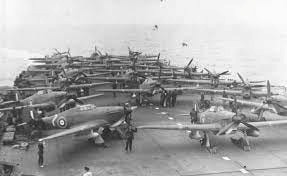
Gradually, or rather in dribs and dabs, Hurricanes and the pilots to man four fighter squadrons were deployed to Malta.Their job was to confront the Italian air assault that waxed and waned in intensity but cumulatively caused increasingly significant damage to the island’s infrastructure and fighting capability. Then, in January 1941, the Luftwaffe came to the aid of the Regia Aeronautica, and the intensity of the raids increased dramatically. Fortunately for Malta, the Luftwaffe units were withdrawn to take part in the invasion of the Soviet Union in June 1941, resulting in a six-month respite.
Regardless of events on the Eastern Front, however, Rommel’s Afrika Korps and his Italian allies were still attempting to capture Egypt and Suez. (Remember the oil!) That offensive depended upon troop reinforcements, vehicles, ammunition, spare parts and fuel—all of which had to be transported across the Mediterranean.
Malta was tasked with interdicting that lifeline. Bombers and torpedo bombers, submarines and surface ships were deployed to Malta and assumed an offensive role. Demonstrating remarkable resilience and tenacity, in a short space of time, Malta became what Churchill referred to as Britain’s ‘unsinkable aircraft carrier.’ By late 1941, Malta-based aircraft, ships and submarines came close to choking off the Axis supply lines to North Africa.
Unfortunately, Hitler noticed. He sent his Luftwaffe back to Sicily in December 1941.
Meanwhile, Rommel opened a new offensive. With alarming speed, his panzers advanced across North Africa, raising again the spectre of the Axis Powers seizing the Suez Canal and taking control of Middle Eastern oil fields. Protecting his advance was a new Luftwaffe offensive directed against Malta. What became known as the ‘Second Malta Blitz’ began.
For the next nine months, the fate of Malta, the Mediterranean and Middle Eastern Oil hung in the balance. From February to May, Malta — an island just 14 miles long and 9 miles wide — sustained more bombing than all of London had during the Blitz or all of Germany endured in the entire year of 1942. A thousand bombs were dropped on Malta in February alone. In March, the number of air raids exceeded the number of Luftwaffe attacks against all British cities in the entire war. Yet the raids escalated even farther in April. Although most of these air raids were directed at legitimate military targets such as the naval dockyards, the shipyards and the RAF airfields, tens of thousands of civilian buildings — many of them historical and of great architectural value were damaged or destroyed.
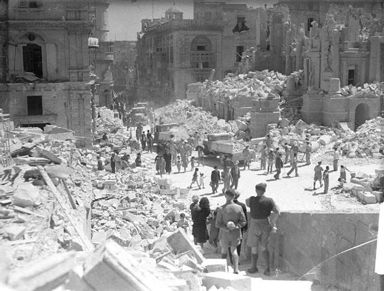
The devastation was terrible, but that was not the only scourge.
Malta and her defenders were entirely dependent upon supplies of food, clothing, ammunition and fuel brought by ship from Alexandria or Gibraltar — across a thousand miles of hostile sea. Convoys could only venture out with a massive Royal Navy escort. Some ships survived the gauntlet of relentless attack by Italian and German ships, submarines and aircraft. But fewer and fewer of them. In the course of 1942, multiple relief convoys were forced to turn back, while others were simply decimated.
Ultimately, it was the supply situation, not the bombing, that brought Malta within a hair’s breadth of defeat. By August of 1942, the population was slowly starving, and the RAF’s offensive aircraft were grounded for lack of fuel. The governor of Malta warned His Majesty’s government in London that unless adequate supplies — including aviation fuel for the island’s fighter aircraft — reached Malta by September, he would be forced to surrender.
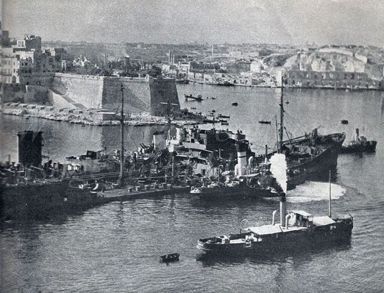
The Royal Navy pulled together an escort of four aircraft carriers, two battleships, seven cruisers, and thirty-two destroyers to fight 14 cargo ships, including one tanker, to Malta. Only four of the merchantmen reached Malta under their own power; a fifth ship, the tanker Ohio, was towed into Grand Harbour two days later. She was already sinking, but most of her cargo could be unloaded before she went to the bottom. It was enough. Just.
It was not until a smaller convoy arrived in late November that the supply situation began to ease. Other convoys continued to arrive thereafter, and by 1943, the crisis was over. Instead of being the target, Malta again went on the offensive and became the springboard for the invasion of Sicily.
Universal Buy Link: https://books2read.com/u/4DegDe
Meet Helena P. Schrader

Helena P. Schrader is the author of 21 historical novels and six non-fiction history books. She earned a PhD in History from the University of Hamburg and served as a U.S. diplomat in Europe and Africa. She has won numerous literary awards, and two of her titles—Cold Peace, the first book in the Bridge to Tomorrow series on the Berlin Airlift, and her Battle of Britain novel, Where Eagles Never Flew—achieved Amazon #1 Bestseller status in aviation and military historical fiction.
Schrader masterfully blends meticulous historical research with compelling storytelling. Her success can best be measured not by the many awards or positive reviews, but by the fact that witnesses of the history she describes praise the authenticity of her works. Battle of Britain ace, W/Cdr Bob Doe enthusiastically declared that Where Eagles Never Flew got it “smack on the way it was for us fighter pilots.” Traitors for the Sake of Humanity: A Novel of the German Resistance won recognition for its extraordinary sensitivity to a complex topic from the survivors of the military conspiracy against Hitler and the widows of some of those executed.
The dramatic siege of Malta in WWII attracted Schrader’s attention years ago, and she has visited the island several times to conduct research, visit the important sites, and gain a greater understanding of the people. As she became drawn deeper into the material, the temptation to combine a novel about the siege of Malta with another of her lifelong loves, the British Merchant Navy, became irresistible. Schrader has been an avid sailor all her life and served as a petty officer in the British Merchant Navy on sail training ships in her youth.
Connect with Helena
Website: https://helenapschrader.com
Facebook: https://www.facebook.com/helena.p.schrader.7
Bluesky: https://bsky.app/profile/helenapschrader.bsky.social
Quora: https://www.quora.com/profile/Helena-Schrader-1
Substack: https://hpschrader.substack.com/
BookBub: https://www.bookbub.com/helena-p-schrader
Goodreads: https://www.goodreads.com/author/show/1785954.Helena_P_Schrader
Amazon Author Page: https://www.amazon.com/stores/Helena-P.-Schrader/author/B0024JCLUW


